
Litter
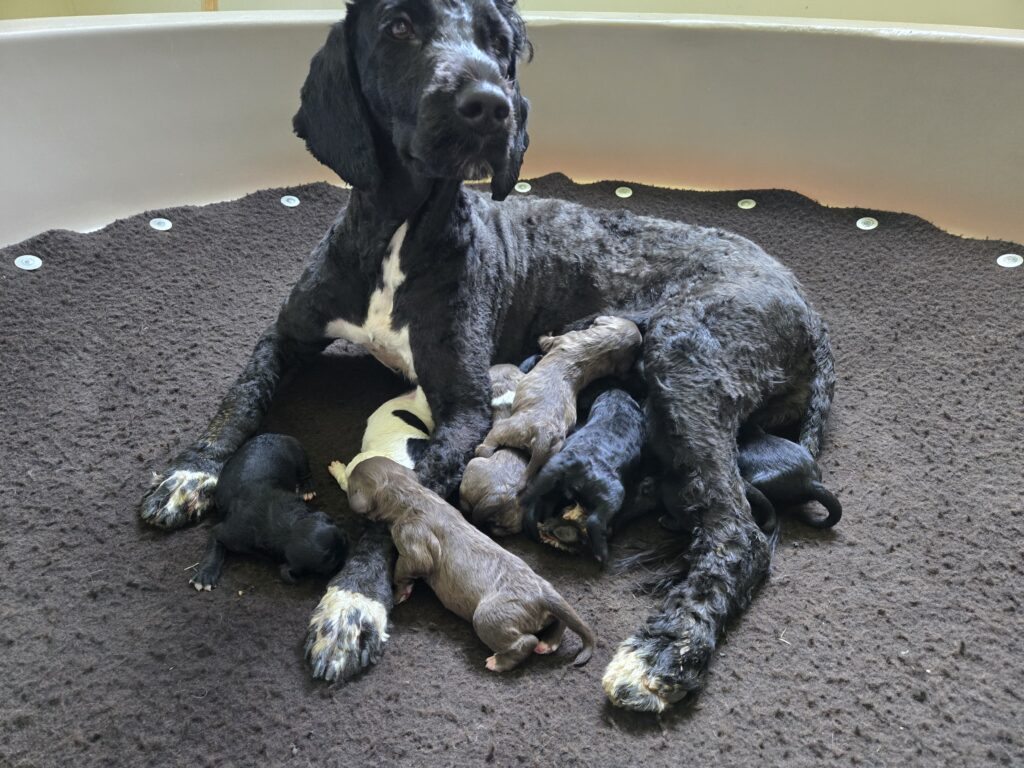
Check out our adorable puppies below. To see more information about the puppies below click the puppie’s picture. To reserve your favorite puppy click the “Reserve Me Now” button and fill out the reservation form.

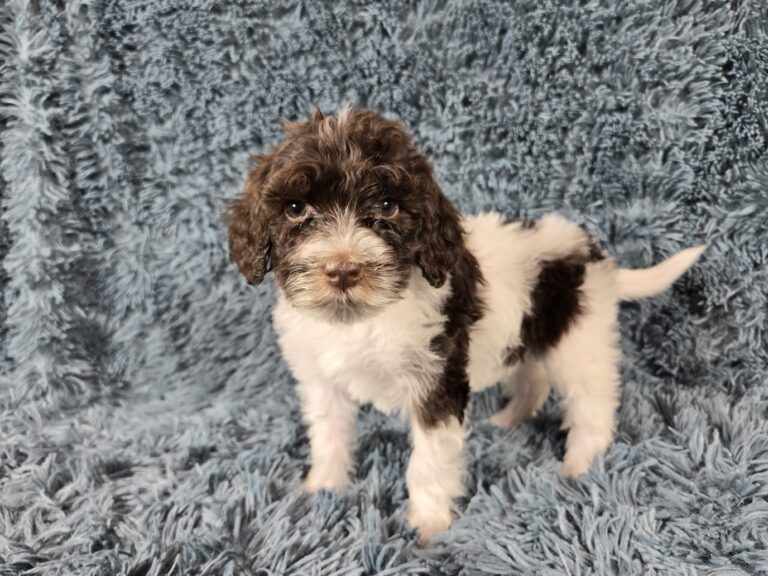
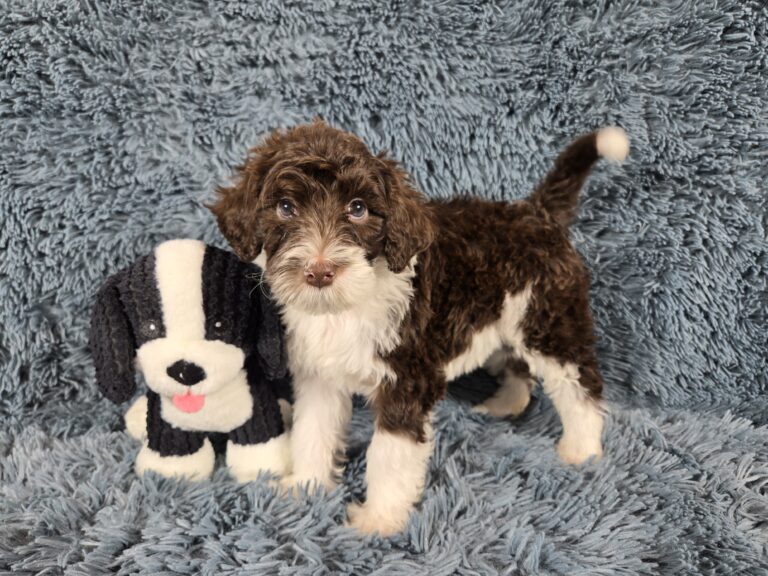
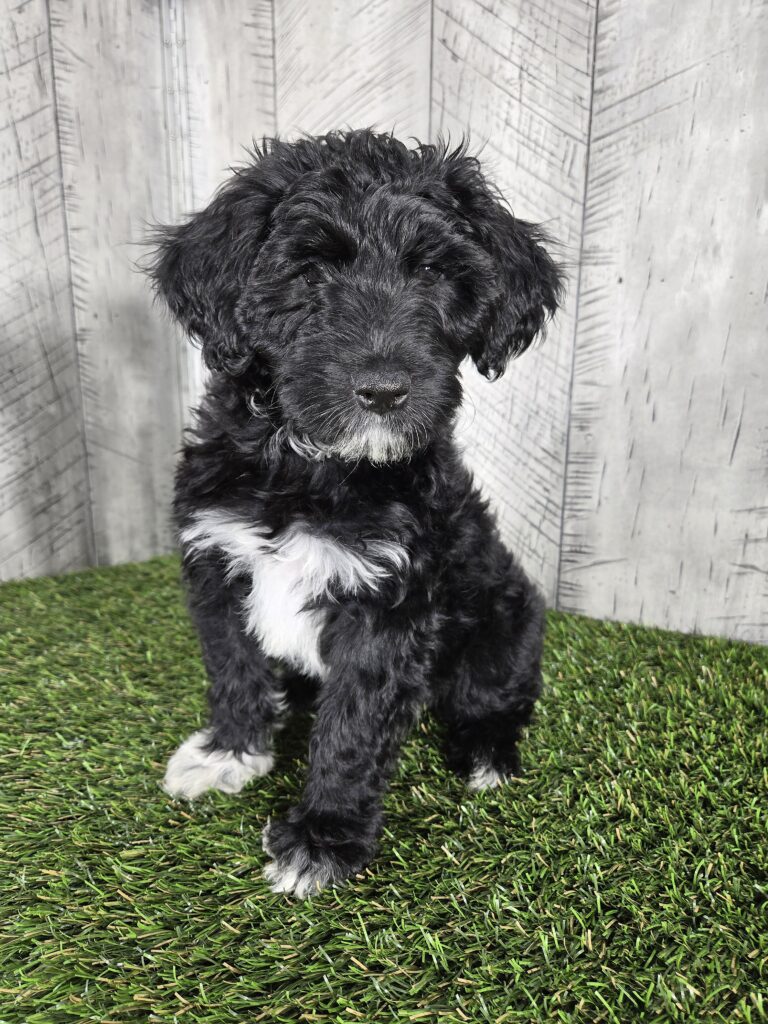

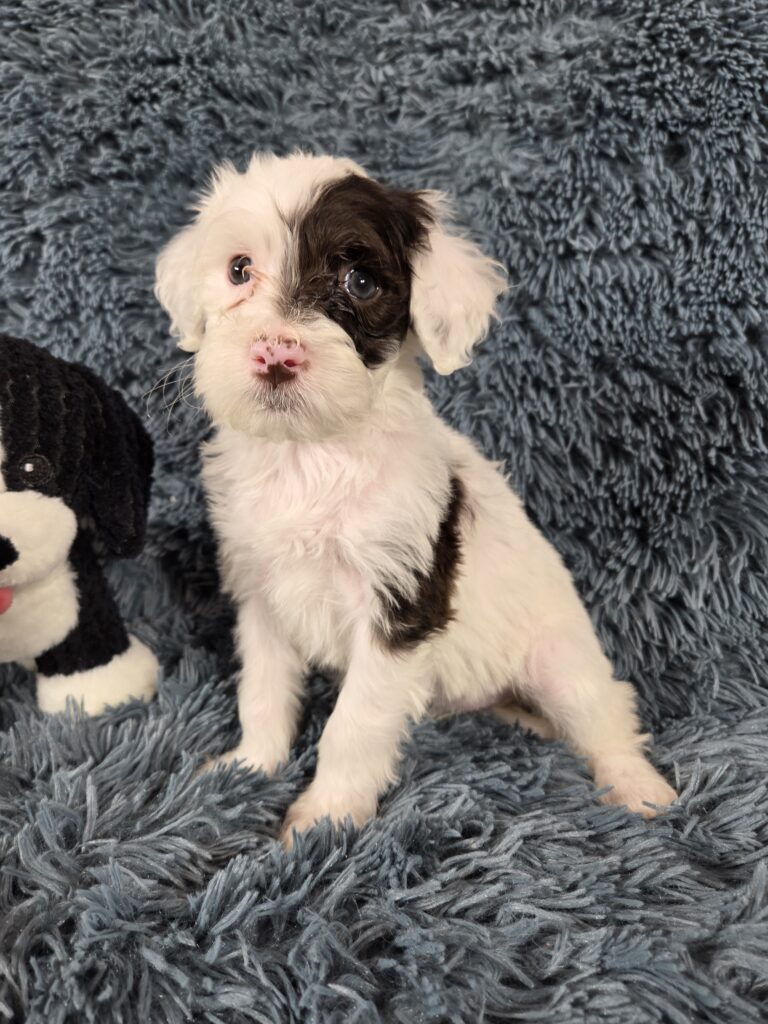
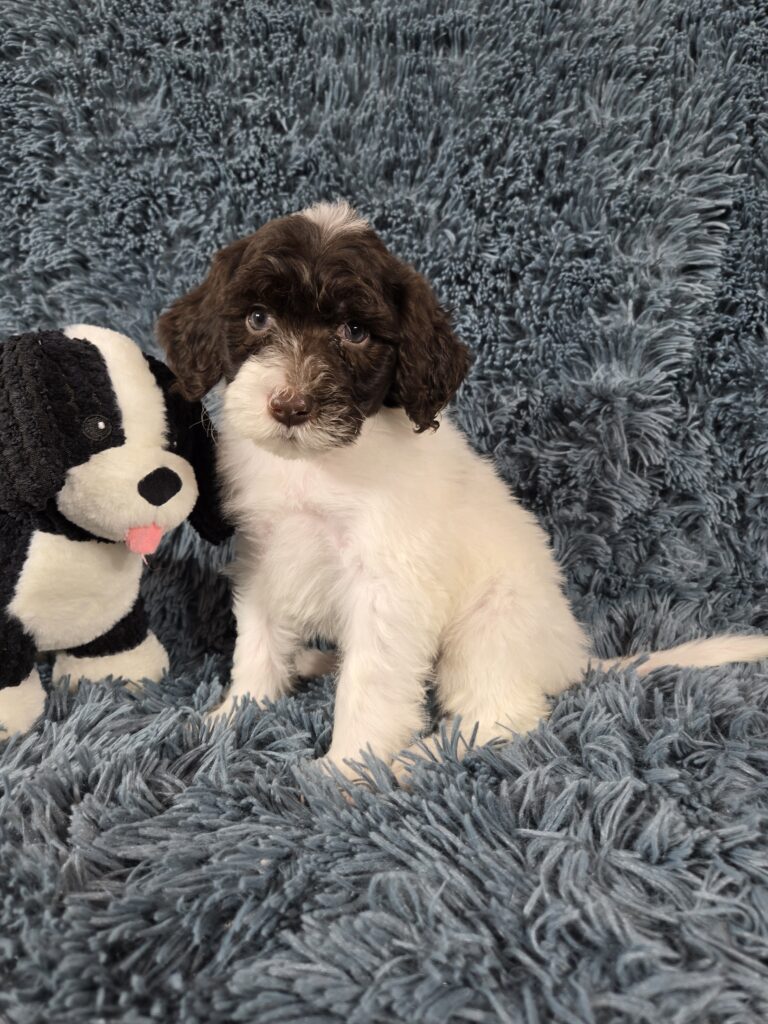
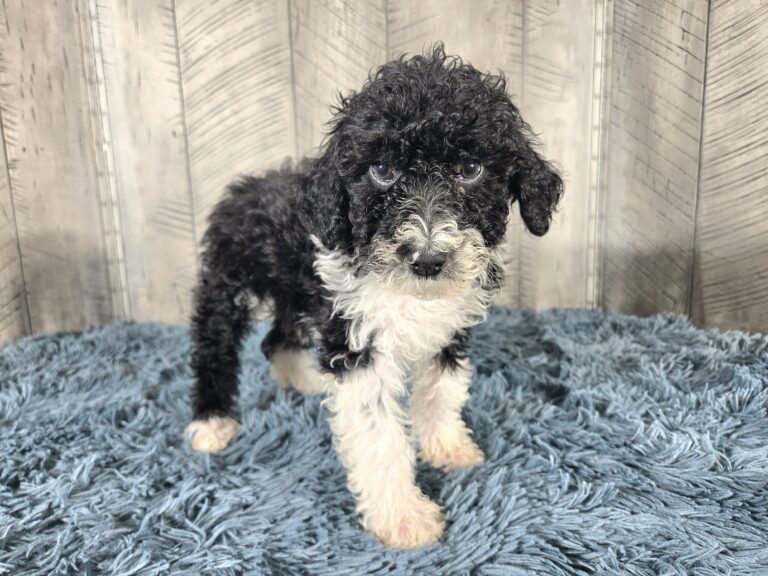

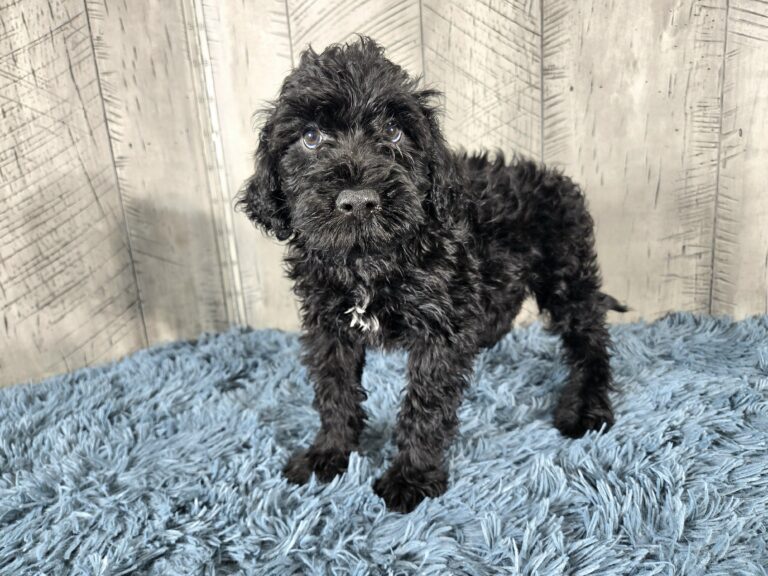
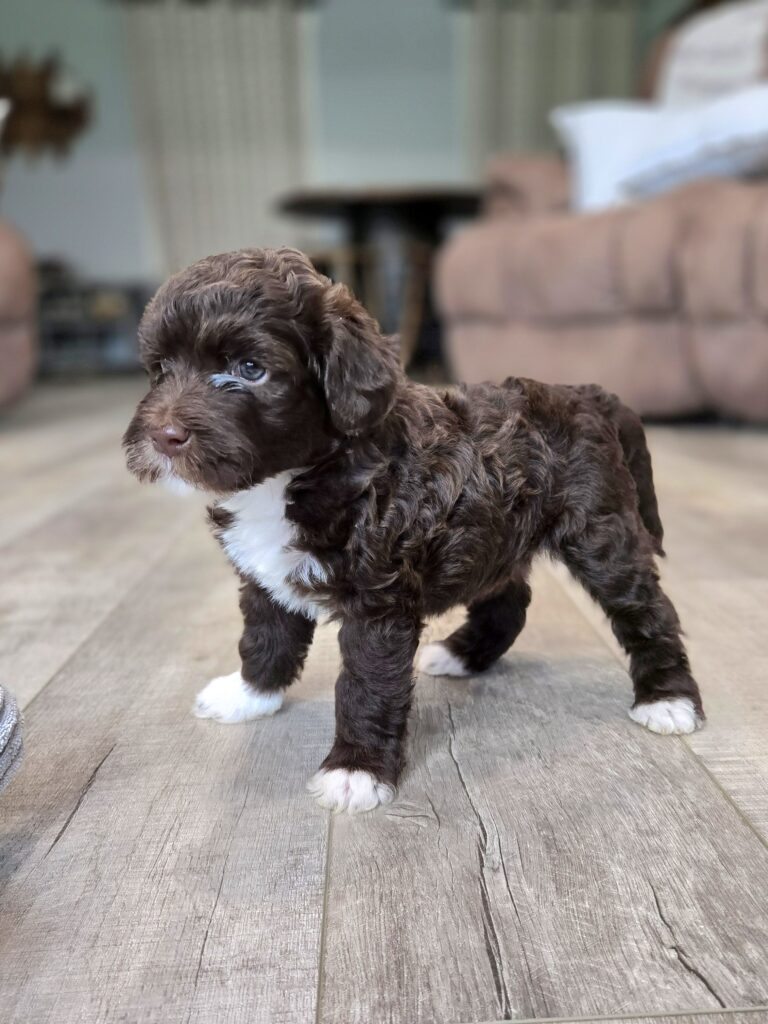
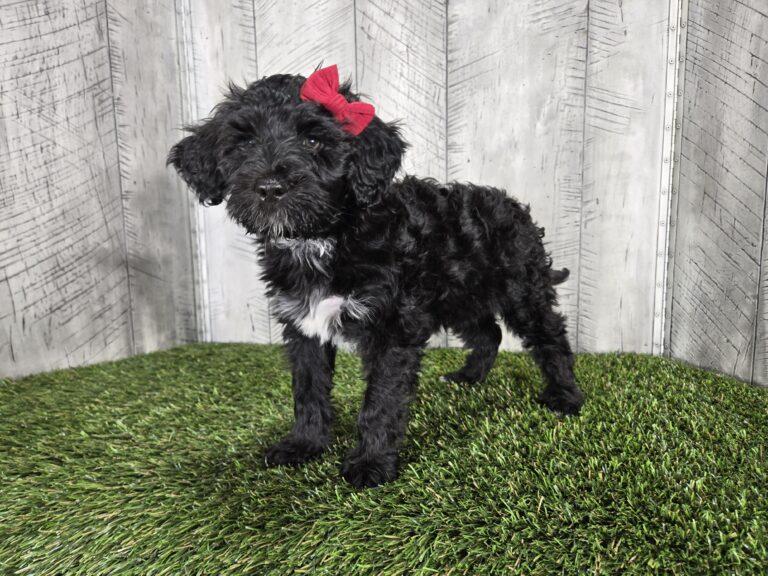

The Portuguese Water Dog, or “Portie,” is a medium-sized working breed from the Algarve coast of Portugal. Here’s the 30-second version of the breed.
| Height (Male) | 20 to 23 inches at the shoulder |
|---|---|
| Height (Female) | 17 to 21 inches at the shoulder |
| Weight (Male) | 42 to 60 pounds |
| Weight (Female) | 35 to 50 pounds |
| Life expectancy | 11 to 13 years (PWDCA health surveys, though many articles claim 12 to 15) |
| Coat type | Single coat (no undercoat), either curly or wavy |
| Colors | Black, brown, white, parti-color (black-and-white, brown-and-white) |
| Energy level | Very high |
| Trainability | Very high |
| Shedding | Minimal |
| Good with kids | Yes, with caveats (see Section 6) |
| Apartment-friendly | Yes, if you commit to daily exercise |
| AKC group | Working Group |
| AKC recognition year | 1983 |
| Country of origin | Portugal |
| Price from a health-tested breeder (2026) | $2,500 to $4,500 |
Two notes on this table. We list life expectancy at 11 to 13 years because that’s what the PWDCA health surveys actually show, even though most websites quote 12 to 15.
The price range we list assumes a genuinely health-tested puppy from a breeder who runs the recommended DNA tests on both parents and provides written documentation before you place a deposit. You can find puppies advertised at $800, and we’ll explain in Section 14 what’s typically missing at that price point.
Every Portuguese Water Dog article opens with a sentence about Portuguese fishermen. The history is actually more interesting than that, and the version most websites tell skips the parts that affect how the breed behaves today.
Portuguese fishermen along the Algarve coast bred these dogs to work from boats. The dogs herded sardines and tuna into nets, retrieved gear that fell overboard, and swam messages between vessels. A 1297 Portuguese monastery record describes a black-coated dog with “long rough hair, cut to the first rib and with a tuft on the tip of his tail” pulling a drowning sailor from the sea. That description, written more than 700 years ago, matches the lion clip you’ll see at AKC dog shows today.
Fishing wasn’t a hobby and the dogs weren’t pets. They were working crew members. Portuguese fishing fleets ranged as far as the Grand Banks off Newfoundland, and the dogs went with them. Their webbed feet, their single waterproof coat, and their lung capacity all came from generations of selection for hard work in cold ocean water.
That working history matters because it explains why your couch-bound Portie still wants a job. The drive doesn’t disappear in three generations, and we see it in eight-week-old puppies who try to herd the other puppies in the whelping room toward the food bowl.
The part most articles bury comes next. By the 1930s, industrial fishing had largely replaced the use of working dogs along the Portuguese coast, and the breed nearly died out. By the 1950s, fewer than 50 Portuguese Water Dogs existed worldwide.
The breed survived because of one Portuguese businessman named Vasco Bensaúde. He recognized what was happening and started a recovery breeding program at his kennel near Lisbon. Nearly every modern Portuguese Water Dog descends from a small number of his founding dogs, with one stud named Leão appearing in almost every pedigree.
That narrow founder population is why DNA health testing matters so much in this breed. We’ll cover the specific tests in Section 9. When a breed comes back from near-extinction through a handful of dogs, every recessive genetic condition those founders carried gets concentrated. Responsible breeders test for those conditions. Backyard breeders don’t.
The first Portuguese Water Dogs arrived in the United States in 1958. A New York couple, Herbert and Deyanne Miller, imported a pair from Bensaúde’s kennel and helped establish the American population. By 1972, enough dogs were in the country to form the Portuguese Water Dog Club of America (PWDCA), which to this day remains the gold standard for breed-related guidance and breeder ethics. The American Kennel Club recognized the breed in 1983.
For most of the 1980s and 1990s, the breed remained obscure. Then in April 2009, the Obama family adopted Bo, a six-month-old Portie gifted by Senator Ted Kennedy, who also owned the breed. A second Portie, Sunny, joined the family in 2013.
The Obama effect was real and measurable. Demand for Portuguese Water Dog puppies tripled within 18 months. Prices rose. Waiting lists at responsible breeders extended to 18 months or longer. Unfortunately, demand also pulled in breeders who weren’t running health testing, and a wave of poorly-bred puppies entered the market during that period.
Most of those problem breeders have since disappeared. The breed is back to a healthier population of careful breeders who do the work of testing and matching. But the lesson stuck with us. When demand for a breed spikes, buyers have to work harder to find a breeder doing it right, and that’s exactly the situation we help our buyers work through today.
If you watched San Francisco Giants baseball in the late 1990s and early 2000s, you saw Portuguese Water Dogs at work. The team kept a group of trained Porties known as BARK (Baseball Aquatic Retrieval Korps) who retrieved home run balls hit into San Francisco Bay. The dogs returned the balls, which were then sold to fans as collectibles with proceeds donated to animal rescue. It’s an oddly fitting job for the breed. They were literally bred to retrieve things from the water.
The Portuguese Water Dog breed standard recognizes two coat types. Both are equally correct. Neither is preferred over the other in the show ring. We’ve raised both, and families ask us which to choose more often than any other question during our first phone call.
The curly coat is compact cylindrical curls with no sheen. Think of tight ringlets that don’t reflect light. Curly coats feel denser to the touch and can look almost wool-like when groomed short. They mat faster around the ears, the armpits, and behind the elbows because the curls catch on themselves whenever the dog moves.
If you’ve seen Bo Obama, you’ve seen the curly coat type.
The wavy coat falls in gentle waves rather than tight curls. It has a slight sheen when light hits it, feels softer to the touch, lays flatter against the body, and reads as more “flowing” when the dog moves. Wavy coats hide debris better (a wet wavy-coated Portie can come back from a swim looking neat) but they trap dirt deeper in the coat, so bathing matters more.
Sunny Obama had a wavy coat.
The honest answer is it depends less on which type you pick and more on the individual puppy’s personality. Both coats require the same brushing schedule and produce the same level of dander, and both groom into the same two AKC-approved clips. The differences are aesthetic.
What we tell families is if you want the “classic Portie look” most people picture when they hear the breed name, you want a curly. If you want a coat that flows when the dog runs and looks softer to strangers, you want a wavy. Both are wonderful. We’ve never had a family come back disappointed in their coat type.
A small percentage of Portuguese Water Dog puppies are born with what’s called an improper coat. These dogs have shorter, smoother hair, often with feathering on the legs and tail. They look almost like a setter or a flat-coated retriever. The trait is recessive and harmless. Dogs with improper coats can’t be shown in conformation and shouldn’t be bred, but they make wonderful pets and are often sold at a reduced price.
If a breeder offers you an “improper coat” puppy, they’re being honest with you. Walk toward that breeder, not away. The dog will be just as healthy and just as wonderful, and the only thing it can’t do is compete in the conformation show ring.
Every other website you’ll read describes Portuguese Water Dogs as intelligent, affectionate, and easy to train. That’s true, but it’s also what every working breed website says about its own breed. It tells you nothing about what living with a Portie is actually like. Let us tell you what we’ve seen.
Here’s the part nobody writes. Portuguese Water Dogs were bred to work alongside their humans, anticipate their needs, and solve problems independently when needed. That’s wonderful when you give them a job and frustrating when you don’t, because the same problem-solving drive that retrieves a thrown ball from the bottom of a pond also opens kitchen cabinets at 9 a.m. on a Tuesday.
A Portie without enough mental engagement will invent jobs for itself. We’ve placed puppies whose first solo project was removing every shoe from the coat closet, one at a time, and arranging them in the kitchen. Another one figured out how to open the refrigerator within two weeks. They’re not destructive out of spite. They’re problem-solvers without a problem to solve.
The fix isn’t fancy. A 30-minute training session, a puzzle feeder, or a long structured walk usually resolves the unwanted behavior within a day or two. But you have to be willing to provide the input. A Portie can’t entertain itself for 10 hours while you work.
Porties are sometimes called “Velcro dogs” because they want to be wherever you are. Not in the next room. Not in the same room. Within touching distance of you for as much of the day as the household routine allows.
Our adult dogs follow us to the bathroom. They follow us to the basement. They follow us from the couch to the kitchen for a glass of water and back to the couch, sometimes circling our legs to make sure they’re not left behind. If you close a door behind you, you’ll come out to find a Portie pressed against the other side waiting.
For most families, this is part of the charm. For people who want a dog that lives a parallel life in the same house, this is the wrong breed.
Portuguese Water Dogs are funny. They know it. The Portuguese Water Dog Club of America’s breed description uses the word clownish, and that’s the right word. Our dogs play games of their own invention that involve stealing something benign like a slipper or a dishrag, then looking directly at you to make sure you’ve noticed, and waiting for you to chase them. They figure out which behaviors get a laugh and repeat them on purpose.
All of this is one of the best parts of the breed. But the same intelligence that makes them funny also makes them sassy. A Portie who decides today’s training session is boring will sit down and look at you. They won’t run away. They won’t act out. They’ll just sit, look at you, and refuse to participate in the boring activity. Then it’s up to you to do something more interesting with the session.
We tell families this isn’t disobedience. It’s negotiation, and the right response is to increase the reward value, change the activity, or shorten the session before the dog disengages.
Porties are vocal but they’re not yappy. They alert bark. Someone can simply walk past the front window and they bark. Then they look at you to confirm you’ve registered the report. A car door slams in the driveway and you’ll get a single bark and an attentive posture. This is the kind of pose you can read across the room as the dog asking if you noticed too. Compare this to a Pomeranian or a Yorkie, who bark at the wind.
The downside is when they do bark, they’re loud. Adult Porties have a deep, carrying bark that surprises people who expected something less from a medium-sized curly dog. If you live in an apartment with shared walls, you’ll need to manage this through training from puppyhood onward.
Porties are aloof with strangers but not aggressive. A well socialized Portie will hold back for the first 30 seconds when meeting a new person, observe, and then warm up. They’re not the breed that throws itself at every visitor. They’re not the breed that bites visitors either.
With other dogs, they’re generally social but high energy. Their play style is full contact with shoulder checks, body slams, and mouth wrestling. This works great with other young, athletic dogs but it overwhelms calm older dogs and small breeds. This might also not work well with your friend’s 12-year-old Cavalier King Charles Spaniel. Their dog may not be happy when your Portie puppy arrives at her doorstep.
Around seven weeks of age, we sit down with each puppy and run them through a few simple evaluations. We’re looking at how confident they are in a new situation, how quickly they shake off a little stress, whether they engage with us or stay focused on their littermates, and whether they panic when you hold them still for a few seconds.
Each of those tells us something different. The puppy who shows medium confidence, recovers fast, engages with people, and accepts being held without struggling is the easiest first-time-owner puppy. The puppy who’s super confident, recovers fast, engages with everything, and fights restraint is the dog sports candidate. We don’t place the high drive puppies in households without sports experience. We’ve made that mistake before, and it didn’t end well for anyone.
The single biggest reason new owners try to return Porties to some breeders is that the family underestimated the amount of exercise the dog needed. We screen for this carefully because it’s the difference between a successful placement and a heartbreak six months in.
A grown Portie needs at least 60 minutes of real physical exercise per day. By “real,” we mean heart rate up, lungs working, and sustained movement. A slow walk around the block sniffing doesn’t count, no matter how long it takes.
The sweet spot for most adult Porties is 90 to 120 minutes of physical activity, split between morning and evening, plus some mental work. That’s what a healthy adult Portie genuinely thrives on.
Until 15 to 18 months of age, follow the five-minute rule. Five minutes of forced exercise per month of age, twice per day, is the maximum. A four month old puppy gets two 20 minute structured walks per day, and a nine month old gets two 45 minute walks. This protects growth plates, which don’t fully close in this breed until roughly 14 months.
None of this means the puppy lies on the couch the rest of the day. Free play in the yard, training sessions, puzzle feeders, and social exposure all count as activity. The five-minute rule applies specifically to forced repetitive activity, such as walking on a leash, sustained running, or repeated fetch sessions on hard ground.
Swimming wins. If you have access to safe water, swimming is the single best form of exercise for this breed. Twenty minutes of swimming roughly equals an hour of land based exercise because the dog is using its entire body against resistance. The breed was built for it, and their water stamina genuinely exceeds their land stamina by a meaningful margin.
If you don’t have access to water, that’s fine, and the breed doesn’t require swimming to be healthy. But if you have a lake, a pond, or even a kiddie pool in the backyard, use them whenever the weather allows.
Mental exercise is the piece most new Portie families underestimate. A 30 minute training session tires a Portie out more thoroughly than a 30 minute walk does, because the dog actually has to think instead of just moving. Scent work, puzzle feeders, structured obedience drills, and trick training all count.
Our recommendation is at least 20 minutes of focused training or puzzle work per day. We recommend that every puppy family use training games to keep the dogs mentally sharp. When the brain gets worked, the dog settles, the family bonds with the pup, and the house stays in one piece.
We’ve seen the under exercised Portie. It chews baseboards and counter surfs the kitchen. It runs the perimeter of the yard at 11 p.m., demand barks at the family from across the room, and pulls on their leash hard enough to take an adult off balance. Some develop what families call pinball syndrome, running circuits through the house at top speed for 20 minutes straight.
None of this is a personality flaw. It’s the dog telling you, in the only way it knows how, that it needs more input than it’s getting from the daily routine.
Yes, with a caveat. The breed doesn’t care about square footage. It cares about activity. A Portie in a 600 square foot apartment with an owner who takes it for a 45 minute morning walk, a 30 minute training session at lunch, and a 60 minute evening outing will be a happy dog. A Portie in a 4,000 square foot suburban house whose owner expects it to exercise itself in the yard will be miserable and destructive.
Apartment living can work for this breed. Dog owners who don’t have time to exercise their dogs don’t work for this breed.
It is best to develop a daily routine for your puppy. In the morning, take a 45-minute brisk walk or 20-minute swim. Then follow this with breakfast. Then, around Noon do a 15-minute structured training session or a puzzle feeder for lunch. In the late afternoon, have a 30-minute play session running off leash in a safe area, or a second walk. Then end the evening with a 10-minute settling activity, calm chew, or relaxed grooming session.
That’s roughly 100 minutes of physical activity plus 25 minutes of mental work. The dog sleeps soundly, the household stays calm, and the dog’s needs are met.
We place a lot of puppies into homes with children. The question of whether Porties are good with kids gets a more honest answer than most breed sites give.
A well-bred, well-socialized Portuguese Water Dog raised in a home with children is generally a wonderful family dog. They bond with kids deeply. They’re patient with most childhood handling. They’re playful in ways that match a child’s energy, and by age two or three, most Porties become genuinely devoted to the children in their household in a way that’s noticeable to visitors.
The things to keep in mind are about the puppy stage, not the adult dog.
From 8 weeks to roughly 6 months, Portuguese Water Dog puppies are mouthy. They grab, they nip, they tug, they bite. This is normal puppy behavior, and Porties tend to be more mouthy than average because of their working background as retrievers of nets, tackle, and gear in working fishing operations.
A child under five years old is roughly the same size as a littermate to an 8 week old Portie puppy. The puppy will play with the child the same way it played with its siblings, including rough mouthing, body slams, and ankle grabs. This isn’t aggression. It’s miscommunication.
There are two things that work. One, teach the child to be still and not run when the puppy gets mouthy. Running triggers the chase and grab behavior. Second, supervise every interaction until the puppy is past 6 months of age. Don’t leave a young Portie puppy alone with a small child. Not once.
Portie puppies don’t know where their feet are. Until about 10 months of age, they trip over their own legs, run into furniture, and knock over anything in their path. A 35 pound puppy moving at full speed will absolutely take down a four year old. This is also not aggression. It’s adolescence.
Structured play, calm play, and crate breaks when the puppy gets an energy spike all help. We teach families to recognize when the puppy crosses from playful to wound up and to interrupt play before it becomes chaotic.
Before the puppy comes home, we ask the family to teach their children three things.
The first is gentle hands. Open palm, light pressure, and absolutely no grabbing at the fur, ears, or tail. We have the kids practice on a stuffed animal before the puppy ever arrives.
The second is the be a tree technique. When the puppy gets too excited, the child stops moving, crosses their arms over their chest, and looks at the ceiling without making eye contact. Boring trees are not interesting to puppies. The puppy disengages within 30 to 60 seconds.
The third is that the puppy’s space is private. The crate is the puppy’s bedroom, and just as children have personal space, the puppy’s crate is off-limits to children when the puppy is inside it. Hands don’t reach in. Bodies don’t crawl in. Food bowls don’t get approached during meals. This should be a household rule because it helps prevent dogs from becoming protective of food, toys, or other valued items. This type of behavior is called resource guarding.
Every litter is raised inside our house, not in a separate kennel building. Our children handle the puppies daily from week 3 onward. The puppies hear kitchen noises, doorbell rings, vacuum cleaners, and family conversations from the moment they’re aware of sound. By the time they leave at 8 weeks, they’re comfortable with children, chaos, and normal household life.
We also use a protocol called Early Neurological Stimulation (ENS) during the first three weeks of life. ENS was developed for working dog breeders to produce puppies that handle stress better and adapt more easily to new environments later in life. It involves a series of brief, specific handling exercises done daily during a narrow developmental window. Most pet breeders skip it. We don’t, because the puppies that come out of an ENS program consistently make better family dogs.
That’s what “house-raised” actually means when we use the phrase on our site. It’s not marketing language, and it’s not a promise we made up to differentiate ourselves from kennel-based breeders. It’s a developmental protocol that shapes the kind of family dog the puppy becomes.
We’re not groomers by training and we won’t pretend to be. What we’ll do is tell you what you’re committing to when you bring home a Portuguese Water Dog, because grooming is the second most common reason for owner regret after exercise.
You need to brush your Portie thoroughly, at minimum, two to three times per week. Not a surface pat-down. Actual line brushing that reaches all the way down to the skin and works out the tangles forming at the base of each curl before they consolidate into mats.
A typical brushing session for an adult Portie takes 20 to 30 minutes. Multiply by three sessions per week and you’re looking at roughly 90 minutes of weekly home grooming, every week, for the life of the dog.
If you skip a week, the coat mats. Mats are painful, they cut off air to the skin, and they often have to be shaved out rather than brushed out. A neglected Portie coat is one of the saddest things a vet or groomer sees.
Plan on a salon visit every 6 to 8 weeks. In our area of Ohio, that runs $80 to $110 per session. In larger metro areas like Cleveland, Columbus, or anywhere on the coasts, expect $120 to $180 per session.
Most families budget around $80 to $120 a month for grooming, similar to what you’d spend on a Doodle, a Poodle, or any other non-shedding breed. Some owners learn to do touch ups at home between salon visits to stretch the timeline.
Two clip styles are recognized by the AKC breed standard.
The retriever clip is the most popular pet clip. The coat is one to two inches long all over, scissored or clippered evenly, with a tuft of natural-length hair on the last third of the tail. Most pet Porties wear this clip year round because it’s neat, low maintenance between groomings, and looks tidy.
The lion clip is the traditional working clip from Portugal, and it’s the more dramatic of the two options. In this clip, the front half of the dog, meaning the head, neck, chest, and front legs, are kept at full length. From the last rib backward, plus the muzzle, the coat is shaved close to the skin. A tuft is left on the tip of the tail. This is the clip you see in AKC conformation shows. It looks striking. The clip has functional history behind it. The long front half of the coat insulated the dog’s heart and lungs in cold ocean water, and the shaved back half reduced drag while swimming.
Both are correct and both are equally welcome in the show ring. The retriever clip is more common in pets because it’s tidier between groomings and most non-Portie people read it as a normal dog haircut. The lion clip turns heads at the dog park and signals to anyone who knows the breed that you’re showing off the traditional working clip.
Porties get ear infections. The combination of drop ears, swimming, and the hair that grows inside the ear canal creates a moist environment where bacteria and yeast thrive.
After every swim, dry the ears. We use a soft towel and gently work into the ear opening, careful not to push water further into the canal. Every two to three weeks, clean the ears with a vet-approved cleaner that loosens wax and dries the inner surface. If you smell anything off or see redness, get to the vet immediately. A mild ear infection caught early costs $40 to treat. A bad one that’s been festering for two months can run $300 and cause permanent hearing loss.
Bathe a Portie every four to six weeks. More often than that and you strip the natural oils from their single coat and end up with dry, brittle hair. Less often and they start to smell musty.
Use a dog shampoo formulated for double cleansing. Lather, rinse, lather again, rinse thoroughly until the water runs completely clear, because residual shampoo causes itchy skin and contributes to matting within days of the bath. Towel dry first, then either air dry or blow dry on a cool setting. Wet curly coats that aren’t fully dried mat within hours.
We recommend every puppy family purchase a basic at home grooming kit with a slicker brush, a metal comb, and a guide to brushing technique. We tell them to find a local groomer who has worked with Portuguese Water Dogs before the puppy needs its first salon visit around 4 to 5 months of age. Not every groomer knows the breed. Ask specifically. A groomer who confuses a Portie with a Doodle will produce a haircut that doesn’t suit the dog.
If you want a deeper grooming education, the Portuguese Water Dog Club of America publishes detailed grooming diagrams for both clips. We point families to those resources. We don’t try to teach grooming ourselves because that’s not our expertise.
The hypoallergenic question is the single most searched topic about the breed. It deserves a careful answer because most articles you’ll read either oversell the hypoallergenic claim entirely or dismiss it without nuance. Both miss the truth.
Portuguese Water Dogs are considered hypoallergenic, which technically means they have a decreased tendency to provoke an allergic reaction. It does not mean allergen-free. No dog is allergen-free.
Many people with mild to moderate dog allergies tolerate Porties well. Some don’t. The only way to know which group you’re in is to spend time with adult Portuguese Water Dogs before you commit to a puppy.
People who are allergic to dogs are reacting to specific proteins, not to the hair itself. The seven known dog allergen proteins are labeled Can f 1 through Can f 7, each one structurally distinct and triggering different allergic responses in different people. They’re found in dog saliva, dander (dead skin cells), and urine. The hair itself isn’t an allergen. The hair carries dander, which is.
Most dogs have a double coat. Which is a topcoat of guard hairs and an undercoat of soft insulating hair. The undercoat sheds continuously, releasing dander into the air with every shed hair, and that dander travels on air currents through your entire home. A Labrador or Golden Retriever can release a remarkable amount of dander into a household environment over the course of a normal week.
Portuguese Water Dogs have a single coat. There’s no shedding undercoat releasing fresh dander into household air every few minutes. The hair grows continuously like human hair, and dead hair stays in the coat until brushed out. Less shedding means less dander circulation, which means fewer allergens reaching your eyes and lungs.
That’s the mechanism. It’s real, but it’s not magic.
The seven dog allergen proteins aren’t produced equally by every dog. Can f 5, for example, is produced only by intact, or unneutered, males. A person allergic specifically to Can f 5 may tolerate spayed females and neutered males without issue while reacting to intact males.
That’s why a buyer with allergies should never assume that a breed known to be hypoallergenic means they will be fine. The protein you react to may or may not be present in the specific Portie you’re considering.
When a family with significant allergies is interested in a PWD puppy, we suggest they visit our home before they reserve the puppy. This way you can spend some time with our adult dogs without any allergy medication that day.
Another way is the blanket test. We send the family a blanket that two of our adult Porties have slept on for the previous week. We ask the family to place that blanket in their bedroom for three to five consecutive nights and see how they react. If they sleep fine, the breed is likely going to work for them. If they wake up congested or itchy, the breed isn’t a fit, and we direct them to other low-shedding breeds to consider.
We’ve had families pass this test enthusiastically and go on to live happily with their Portie for a decade. We’ve had families fail it and avoid a painful return scenario before any deposit changed hands. The test takes a week and saves heartbreak.
If you have mild allergies and the Portie tolerance test goes well, several strategies can further reduce your exposure inside the home. Purchase HEPA air filters for your bedroom and living room. Run continuously, not intermittently. Institute a no-dog rule for your bedroom. Even if the dog never enters, allergens travel on your clothing during the day and accumulate in the carpet over time. A clean bedroom gives your immune system 8 hours of recovery per day. Consider weekly bathing. More dander reduction than monthly bathing, without stripping the coat. Just make sure to use a gentle dog shampoo. Use allergen-blocking mattress and pillow covers. These are cheap and effective. Wash your hands after every long petting session. Allergens transfer from hands to the face and eyes.
If you have severe allergies, asthma, or a history of anaphylactic reactions to dogs, a Portuguese Water Dog probably isn’t your breed. The hypoallergenic label refers to reduced reaction, not no reaction. Severe allergy sufferers should consider hairless breeds like the Xoloitzcuintli or the American Hairless Terrier, both of which produce significantly less dander than even the best-tolerated coated breeds.
We’d rather lose a sale than place a puppy into a home where someone ends up in the emergency room from anaphylaxis. We’ve turned families away for this reason. They’ve thanked us later.
Portuguese Water Dogs are generally a healthy breed. Most of the dogs we’ve placed live full, active lives well into their senior years with nothing more than routine vet care. That said, there are a handful of genetic conditions the breed is known for, and the difference between a responsibly bred PWD and a poorly bred one comes down to whether the parents were tested for those conditions.
The sections below walk through what those conditions are, what testing is available, and what to ask any breeder for before you place a deposit. Responsible breeders have driven the carrier rates for the most serious conditions down dramatically over the last 20 years through testing. A puppy from health-tested parents starts life with the genetic dice loaded in its favor.
We test every breeding dog in our program and share results openly with anyone who asks. Any breeder you consider should do the same.
GM1 is a genetic condition unique to Portuguese Water Dogs and humans. It’s one of the conditions every responsible breeder DNA tests for, and thanks to widespread testing in the breed, the carrier rate has dropped below 1%.
The condition is autosomal recessive, meaning a puppy can only be affected if it inherits one copy of the gene from each parent. A simple DNA test identifies carriers and clear dogs definitively, so as long as the breeder makes sure two carriers are never bred together, no affected puppies are produced.
Tested through OptiGen (now part of Wisdom Health). Any breeder you consider should show you written GM1 results for both parents.
JDCM is an inherited heart condition that responsible breeders DNA test for. Like GM1, it’s autosomal recessive, so two carrier parents have to be bred together to produce an affected puppy. A linked marker DNA test became available in 2007 through PennGen at the University of Pennsylvania, and the test is routine in well run breeding programs today.
JDCM testing is one of the tests we consider non-negotiable. Any breeder who skips it, or who tells you it’s too expensive or rare enough not to worry about, is telling you something important about how they run their program. Ask to see the test results before you place a deposit.
prcd-PRA is a genetic eye condition that can cause gradual vision loss starting in middle age. Like the previous two conditions, it’s autosomal recessive and easily managed at the breeding level through DNA testing. A test identifies carriers and clear dogs, and as long as two carriers aren’t bred together, no affected puppies are produced. Tested through OptiGen.
Hip dysplasia is a common skeletal condition across many medium and large breeds, not unique to Porties. Most cases are mild and don’t significantly affect quality of life, though severe cases can require surgery. The condition has both genetic and environmental components. Genetics set the predisposition, and weight management, appropriate exercise, and controlled growth during puppyhood all reduce the risk of clinical issues.
Breeders screen their breeding dogs through OFA (Orthopedic Foundation for Animals) or PennHIP evaluations. OFA assigns ratings on a seven-tier scale, and we breed only dogs rated in the top two tiers. We’re happy to provide OFA certificates upon request.
Addison’s disease is a hormonal condition in which the adrenal glands underproduce certain hormones. Portuguese Water Dogs are among about 10 breeds with a slightly elevated rate of Addison’s disease compared to mixed-breed dogs, but the condition is still uncommon, with roughly 1.4% of the breed developing it.
When Addison’s does occur, it’s manageable with daily medication or monthly injections, and treated dogs typically go on to live full normal lives. There’s no DNA test for Addison’s in the breed yet, but research is ongoing. The best thing a buyer can do is ask the breeder whether Addison’s has appeared in their lines and listen for an honest answer.
The improper coat is a genetic variation that produces shorter, smoother hair instead of the standard curly or wavy coat. It’s harmless and entirely cosmetic. The trait is recessive, so two carrier parents can produce improper-coated puppies even when both parents have visibly correct coats themselves.
A DNA test is available, and most breeders test for this so they can disclose the trait honestly to buyers. An improper-coated puppy makes a wonderful pet, just not a show dog.
Follicular dysplasia is a condition where the coat thins or disappears in patches, usually starting between ages 2 and 4. It’s mostly seen in curly-coated dogs from curly-to-curly breedings. The condition is cosmetic rather than health threatening, though some affected dogs develop secondary skin issues.
No DNA test currently exists. Careful breeders track the condition in their lines and adjust their pairings to avoid it.
IBD is an autoimmune digestive condition that causes chronic vomiting, diarrhea, weight loss, and poor coat. It’s believed to have a genetic component, though no specific test exists yet. The condition is manageable with diet and medication, but it’s lifelong once it develops.
Lymphoma and hemangiosarcoma appear at slightly elevated rates in Portuguese Water Dogs compared to mixed-breed dogs. Neither cancer is unique to the breed, and the elevated risk is modest. Most Porties never develop either condition.
Every breeding dog in our program is tested for GM1, JDCM, prcd-PRA, and hip dysplasia, and we keep current eye exams on file. We track health outcomes in every puppy we place and use that information to inform our future breeding decisions. Everything is shared openly with anyone who asks, because we want our buyers to feel confident about what they’re bringing home.
Every puppy we place comes with our 1-Year Health Guarantee. If a hereditary or genetic condition shows up in the first year, we stand behind the dog. That guarantee is part of how we sleep at night, and it’s something we’d encourage any buyer to ask any breeder to put in writing.
Feeding a Portuguese Water Dog isn’t complicated, but it’s not casual either. The breed grows fast, holds weight under its coat, and has individual sensitivities that take a few months to identify.
From 8 weeks to 3 months, feed 4 meals per day in small portions, evenly spaced through the day. Puppies this young have small stomachs and high metabolic demand. Spreading meals prevents low blood sugar while supporting steady growth.
From 3 months to 6 months, reduce to three meals per day.
From 6 months on, two meals per day for the rest of the dog’s life. Most adult Porties do well with breakfast around 7 a.m. and dinner around 5 to 6 p.m.
Look for a large-breed puppy formula until 12 to 14 months. Large-breed formulas are calibrated for slower growth rates, which protects developing joints. Porties grow fast enough to benefit from this slower growth approach even though they’re medium sized at maturity.
Brand recommendations change every few years as formulas shift, so we won’t name specific brands in this guide. We give every puppy family a current recommendation at pickup based on what we’re feeding our own dogs at that time.
The general rule is a named protein source as the first ingredient (chicken, beef, lamb, fish, not “meat meal”), moderate fat content (12 to 16%), and no corn syrup or artificial colors. Kibble, raw, or a fresh food service can all work when the formulation is right. The cheapest grocery store brands usually aren’t.
Portuguese Water Dogs are deceptive about weight. The curly or wavy coat completely hides body condition. A Portie can gain six pounds before the family notices anything. Six pounds on a 45 pound dog is 13% of body weight, which is the equivalent of a 200 pound human gaining 26 pounds without realizing.
How to check body condition under the coat:
Place your hands on the dog’s ribs. You should be able to feel the ribs easily with light pressure, like feeling the back of your hand. If you have to press hard to find ribs, the dog is overweight. If ribs feel sharp and prominent, the dog is underweight.
Look at the dog from above when standing. You should see a clear waist tuck behind the ribs. No waist? Too heavy.
Look at the dog from the side. The belly should tuck up from the chest toward the back legs, not hang parallel.
Weigh the dog monthly during the first two years and every three months as an adult. Catch trends before they become problems.
Some Porties develop sensitivity to chicken, others to grain, and a third group has iron stomachs and eats anything you put in front of them without consequence. The pattern appears during the first 6 to 12 months as the digestive system fully matures.
Watch for chronic soft stools, occasional vomiting, excessive paw-licking, recurrent ear infections, or itchy skin. Any of these can indicate food sensitivity. The first move is to switch protein sources for 8 weeks and see if symptoms resolve. Most cases resolve with a protein change. A small minority need veterinary food sensitivity testing.
Treats should make up no more than 10% of daily calories. For an adult Portie consuming roughly 1,200 calories per day, that’s about 120 calories of treats. Five small training treats equal that.
We use small pieces of plain chicken, cheese, or commercial training treats during the training-heavy puppy phase. Avoid rawhide (choking hazard), bones from the grocery store (splinter hazard), and anything advertised as a dental chew with red dye 40 in it.
Porties drink a lot. Provide clean, fresh water at all times. We refill water bowls twice daily. After heavy exercise or swimming, restrict water intake to small amounts at first to prevent bloat-style stomach distension.
Chocolate (toxic). Grapes and raisins (kidney failure). Onions and garlic (red blood cell damage). Xylitol-sweetened anything (liver failure). Macadamia nuts. Alcohol. Caffeine. Avocado pits. Cooked bones of any kind. Raw bread dough. The standard list.
Porties are smart. Really smart. They pick up new commands faster than most breeds we’ve worked with. They want to figure out what you’re asking, and they respond beautifully to positive reinforcement. They also have opinions, and the families who pretend they don’t end up with a frustrated dog and a frustrated household.
The window from 8 to 16 weeks is the most important developmental period in your dog’s entire life. What happens during those weeks shapes how your dog handles new things, strangers, and stress for the next decade or more.
Our rule of thumb is to aim for 100 different positive exposures before the puppy hits 16 weeks. Mix up the surfaces (gravel, grass, hardwood, carpet, metal grates, stairs), the sounds (vacuum, doorbell, washing machine, traffic, fireworks recordings at low volume), the people (men with beards, men in hats, kids, older folks, people in uniforms, people using wheelchairs or canes), and the environments (the vet’s lobby, a pet store, a friend’s house, a quiet park).
The key word is positive. A scary or overwhelming experience during this window can stick with the dog for life. We tell families to skip the chaotic Saturday afternoon farmers’ market. Take the puppy to a quiet hardware store on a Tuesday morning instead.
We start socialization work at our house around week 5, after the puppies have already completed their Early Neurological Stimulation (ENS) protocol in the first three weeks. By the time the puppy goes home at 8 weeks, it’s met a variety of different people and encountered dozens of novel surfaces and sounds. You’re just picking up where we left off.
Portuguese Water Dogs accept crate training well when it’s introduced gradually and never used as punishment. We crate-train every puppy before pickup so the family doesn’t have to start from scratch.
The crate is the puppy’s bedroom. It’s a safe space, a den, a quiet place. Feed meals in the crate. Provide a chew or stuffed Kong when crating. Start with short intervals (15 minutes) while you’re in the room. Build to longer intervals. Never use the crate as a time out or punishment.
Adult Porties usually stop needing crating around age two or three, depending on the household and the dog’s reliability. Some Porties happily use the crate as a chosen quiet spot for life.
Most Porties are reliably house-trained by 4 to 5 months when the schedule stays consistent. Take the puppy out first thing in the morning, after every meal, after every nap, after every play session, and right before bed. Reward immediately when they go outside. Don’t punish indoor accidents. If you catch them mid-accident, calmly interrupt and carry them outside to finish.
The single biggest reason puppies don’t house train is an inconsistent schedule. The puppy can’t connect the dots about outside if you’re taking them out at random times.
Train recall obsessively. Porties are athletic, fast, and curious, and a dog without solid recall is a dog who will spot a deer at age three, take off after it, and not look back when you call.
Start at 8 weeks with a happy voice and a really good treat in a small enclosed space. The puppy comes to you, the puppy gets paid, the puppy gets released to go play again. Repeat hundreds of times. Then move it to bigger spaces, longer distances, and spaces with distractions.
One thing we tell every family is don’t poison the recall cue. If you call your puppy and then immediately do something unpleasant (a nail trim, ear cleaning, or time in the crate before you leave), the puppy learns that “come” predicts something bad. Always pair the recall with something positive first, then ease into the less fun thing once the dog is engaged with you.
Porties will pull on leash if you let them. They’re strong dogs, and a full-grown Portie hitting the end of a 6-foot leash at full speed can pull a 150-pound adult right off balance.
Start leash training at 8 weeks with a lightweight flat collar and a 4-foot lead. Our rule is any time the leash goes tight, you stop walking. The puppy can pull all they want, but pulling doesn’t get them where they wanted to go. Most puppies figure this out within a few days.
We don’t recommend retractable leashes for this breed. They actively train the dog to pull, because pulling extends the leash. They’re hard to manage when a distraction shows up, and they cause more dog-injury vet visits than any other piece of equipment we know of.
Force-based training. Choke collars, prong collars, “alpha rolls,” and harsh corrections all produce shutdown or resentment in Porties. They’re a sensitive working breed bred over centuries to cooperate with humans, not to be dominated by them. They respond to clarity, consistency, and motivation. They don’t respond to fear.
The fastest training failures we see come from families who’ve watched too much old school TV dog training. The Portie gets confused, then frustrated, then disengaged, and recovering from that takes months. Starting with positive reinforcement from day one saves it all.
We recommend a structured 6 week puppy class starting around 12 weeks of age for most families. The puppy gets socialization with other puppies, the owner gets coached on the mechanics, and the foundation gets built right from the start.
If something specific comes up later, like resource guarding, reactivity, or real separation distress, get a certified trainer involved right away. Small problems caught early are much easier to fix than the same problem six months down the road.
Look for trainers certified through the Karen Pryor Academy, CCPDT (Certification Council for Professional Dog Trainers), or IAABC (International Association of Animal Behavior Consultants). Steer clear of anyone selling “pack leadership” theory or pushing shock collars.
What to expect at each life stage, based on the patterns we’ve watched across the puppies we’ve placed:
The first 8 weeks are our work, not yours, but you should know what’s happening. The puppies are born, receive round-the-clock neonatal care from us for the first few weeks, open their eyes around week 2, and start walking by week 3. Weaning happens between weeks 4 and 6, the socialization sprint starts around week 5, and we evaluate temperament around week 7. Going home day is week 8. We cover all of this in detail in our companion article about how we raise our litters.
The most critical period in your dog’s life. You get a sweet, mostly easy, mostly cuddly puppy who sleeps a lot, eats four meals a day, and learns at lightning speed. House training begins. Crate training continues. Socialization happens daily.
You’re also living with the puppy who will look at you with confusion when you say “no” and then do the thing anyway. Bite inhibition develops. Puppy teeth come in. Everything goes in the mouth.
Milestones during this stretch include the first vet check at 8 weeks, the first booster vaccines, the first nail trim you’ll do yourself, and the first salon visit around 14 to 16 weeks.
The puppy now looks like a smaller version of an adult dog. Coordination improves. House training holds for most pups. Adult teeth come in and chewing peaks during this period.
Foundation obedience consolidates: sit, down, stay, come, leash manners. The puppy can usually hold attention through a 10-minute training session.
Spay or neuter discussion happens with your vet. Current research suggests waiting until 12 to 18 months for large or medium dogs because the hormones support proper joint development. Discuss timing with your veterinarian based on your dog’s individual situation.
Welcome to the teenage stage. The sweet, biddable puppy now selectively forgets its training. House manners regress. Recall falls apart. Counter-surfing emerges as a new hobby. Your dog discovers that other dogs exist and becomes very interested in greeting all of them inappropriately.
All of that is normal. Every Portie goes through it. The dogs who come through this stage intact are the dogs whose families stayed consistent with the same rules, same training, same expectations, no caving on boundaries that were set earlier.
The puppy coat begins to change around months 6 to 7. The soft puppy coat falls out and the coarser adult coat grows in. Many dogs go through a “scruffy stage” between months 7 and 10 where the coat looks transitional and uneven. This is temporary. The adult coat finishes coming in by month 12 to 14.
The dog reaches full physical size around month 12, but the brain isn’t done yet. Mental maturity arrives between months 18 and 24. During this period, you’re managing a fully-grown body with not-quite-grown decision-making.
Energy is at lifetime peak. Exercise needs are highest. Training continues to consolidate. Many families notice a settling-in period around months 20 to 24 when the dog’s adult personality clearly emerges.
The dog is now a partner, not a project. Trained, socialized, calm in known environments, responsive to cues. Energy remains high but is more manageable. Most adult Porties happily nap for several hours during the workday if their morning and evening exercise needs are met.
Annual vet exams, annual heartworm testing, and annual dental cleanings starting around age 4 to 5 become part of the calendar. Regular grooming continues every 6 to 8 weeks just as it did during the puppy years.
Activity gradually decreases and sleep increases. Joints may stiffen, especially after rest, and most owners notice the dog taking longer to get up after a nap. Some dogs develop gray on the muzzle around age 8 to 10, while others show no gray until their final years.
Start senior bloodwork twice yearly at age 8. Watch for changes in drinking, bathroom habits, appetite, energy level, or mental sharpness, because subtle shifts often signal an issue worth investigating. Many problems caught early are manageable. Issues caught late are often not.
Lifestyle adjustments include shorter walks, soft beds for joints, ramps to replace stairs if needed, and a willingness to slow down with the dog. Most Porties retain their playful spirit through their final years even as physical capacity declines.
A PWD has a similar cost to most medium-sized purebred breeds, comparable to a Standard Poodle, a Doodle from a careful breeder, or any other non-shedding family dog. Here’s what to plan for.
A health-tested Portuguese Water Dog puppy from a breeder running the full DNA panel, OFA hip evaluations, and current eye exams typically runs $2,500 to $4,500. Our current pricing falls within this range.
The price reflects the cost of the genetic testing, the prenatal and postnatal veterinary care, the first round of vaccinations and microchipping, and the hundreds of hours a careful breeder invests in each litter. It’s also why a $1,200 puppy advertised online is usually missing one or more of those steps.
Bringing home any puppy involves some one-time costs such as a crate, bedding, food and water bowls, a collar and leash, a starter supply of food, puppy gates, a basic grooming kit, and the first vet visit. Most families spend somewhere between $600 and $1,100 on initial setup, depending on how much they buy new versus borrow from family or friends.
For an adult Portie in a typical household, plan on roughly:
That’s in line with what most families spend on any medium-sized purebred dog with regular grooming needs.
We mention insurance not to alarm anyone but because timing matters. Most insurance plans don’t cover anything classified as a pre-existing condition, and a single vet note from a routine visit can sometimes affect coverage later. Enrolling in a plan before the first vet visit gives you the cleanest start.
Look for a plan that covers hereditary and congenital conditions, has a clear annual coverage amount, and reimburses a solid percentage after the deductible. Insurance plans change their terms often, so we’d rather give you a current recommendation at pickup than name brands here that might not be the right call by next year.
If you read only one section of this guide, read this one. The breeder you choose determines the dog you live with for the next 11 to 13 years. A responsible PWD breeder will look very different from a casual seller, and most of the differences are easy to spot once you know what to look for.
A responsible breeder produces a small number of litters per year, usually 1 to 3. They keep their breeding dogs as house pets, not kennel stock. They’re active members of the PWDCA or a regional Portuguese Water Dog club.
They test every breeding dog for the conditions covered in Section 9 (GM1, JDCM, prcd-PRA, and hip dysplasia), and they’ll show you the certificates without being asked.
They ask you more questions than you ask them. They want to understand your lifestyle, your home, your work schedule, your previous experience with dogs, your kids, your yard, and your plans for training and exercise. A breeder who doesn’t interview you isn’t being careful with their puppies, and that should worry you about everything else.
They have a written contract. The contract covers health guarantees and breeding restrictions on pet-quality puppies (typically requiring spay or neuter and limited registration).
They keep in touch after placement and want photos and updates as the puppy grows. They’re available when you call with a question about the puppy chewing baseboards or refusing to eat. The relationship lasts the life of the dog.
Health test results are public. OFA maintains an online database at ofa.org. Type in the dog’s registered name and any certified results appear. If a breeder tells you the parents are “OFA Good for hips” and the database shows no record for that dog, the breeder is lying.
DNA test results from OptiGen (now under Wisdom Health) and PennGen are also verifiable. Ask the breeder for the certificate numbers and confirm with the testing service if you’re uncertain.
A breeder with nothing to hide will walk you through the verification process happily. A breeder with something to hide will get defensive.
Bring this list to your first conversation:
The conversation goes both ways. Expect the breeder to ask:
A well-bred Portuguese Water Dog puppy from a breeder doing the full health-testing panel typically costs $2,500 to $4,500 in 2026. The price covers real expenses that responsible breeders absorb:
The math works out to a modest profit for a careful breeder, which is part of why we limit ourselves to a few litters per year. We’re not running a high-volume operation, and we don’t want to.
If you see a Portuguese Water Dog puppy advertised for $800 to $1,200, ask what’s missing. Most of the time, the answer is the health testing on the parents. Sometimes it’s the early socialization work as well. The savings on the front end usually show up later as bigger expenses or harder decisions down the line.
Good Portuguese Water Dog breeders typically have waiting lists of 6 to 18 months. Some have lists 2 years deep. This isn’t a marketing tactic. The breeder produces a limited number of puppies per year, and serious families have been on the list for a while.
If you can buy a puppy today, the breeder is either large-scale (high volume, lower care) or new (unproven). Neither is automatically disqualifying, but both warrant extra scrutiny.
Plan ahead. If you want a puppy in spring 2027, contact breeders in spring 2026.
The full answers to most of these questions are spread throughout the sections above. Here are the short versions, with pointers to where you’ll find more detail if you want it.
We’d rather you read this section and decide against a Portie than buy one and regret it. Honest self-assessment now saves a difficult conversation six months from now.
A Portie probably isn’t your breed if:
If you read this list and one or two items feel a little uncomfortable, that’s normal. Most great Portie owners have at least one challenge they work around. If three or more feel like deal-breakers, please choose a different breed. There are wonderful dogs in every group, and not every great family is a Portuguese Water Dog family.
If you’ve read this far, you’re doing the right kind of research. A Portuguese Water Dog is a long-term commitment, and choosing the right breeder matters as much as choosing the right breed.
We raise a small number of AKC-registered Portuguese Water Dog litters per year at our home in Fresno, Ohio. Our puppies are health-tested, ENS-protocol raised from birth, temperament-evaluated at seven weeks, and matched to families based on what we’ve learned about both ends of the leash. Every puppy comes with our 1-Year Genetic Conditional Health Guarantee. We offer nationwide delivery and lifetime support for every puppy we place.
If you’d like to know more, see our available puppies, read about our process, or contact us with questions. We’re happy to talk through whether this is the right breed for your family. Sometimes the answer is no, and we’ll tell you so honestly.
Jamin and Marnita are the owners of My Portuguese Water Dog, a small AKC breeder based in Fresno, Ohio. They’ve been raising Portuguese Water Dog puppies in their home since the early 2020s. Every puppy in their program is health-tested, house-raised, and individually matched to its family.
Be notified by text or email as soon as we get a new litter of Portuguese Water Dog puppies! We only raise a few litters a year so signing up will give you a first row seat.